01 / In this resource
An early CrashScan SIU example — 98 mph and multiple impacts
02 / In this resource
Case question
How can EDR data rapidly surface issues worthy of deeper SIU review?
03 / In this resource
What the evidence showed
An early CrashScan report on a 2017 RAM 1500 showed a maximum recorded pre-impact speed of 98 mph, two recent impact records and investigative loss indicators. The case illustrates how objective crash data can focus follow-up questions quickly.
04 / In this resource
Practical takeaway
EDR data is an investigative triage tool: it can identify objective inconsistencies and high-risk maneuvers, but the final claim conclusion still requires corroborating evidence.
The source evidence exhibit is provided below.
05 / In this resource
Related resources
06 / In this resource
Related cases
07 / In this resource
Evidence exhibit
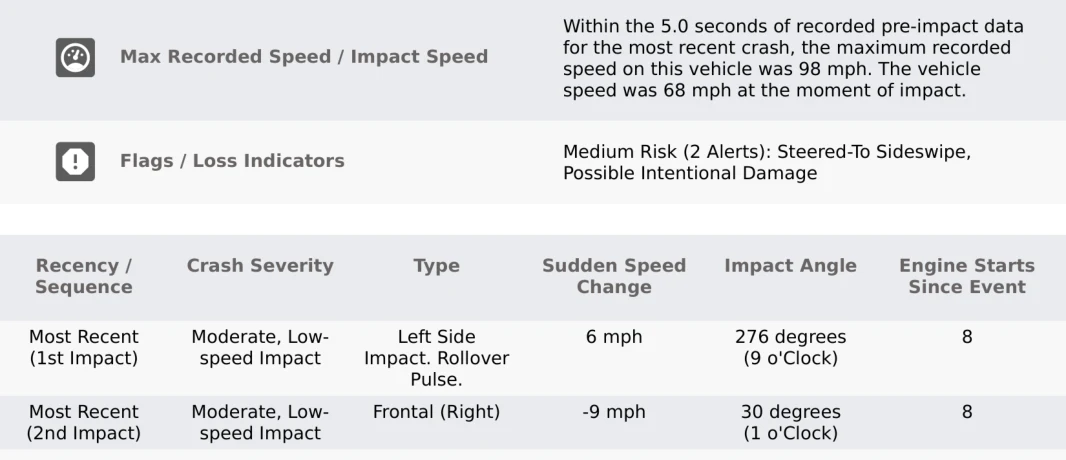
Selected source-report summary and complete two-row crash-data table from the 2018 CrashScan example. A blank gap separates the non-contiguous source excerpts. Report flags identify investigative leads and are not findings of fraud or fault.