
Collision Sciences

Collision Sciences / Solutions

Better questions.
Stronger investigations.

Bring recorded vehicle evidence into police collision investigations, forensic reconstruction and insurance claims. Connect acquisition, analysis and expert review around the questions that matter.

BUILT FOR PROFESSIONALS
Technology + engineering expertise

Applications

A common evidence foundation.
Different professional needs.

01 / Investigations

Forensic investigations & law enforcement

Bring recorded vehicle data together with scene measurements, vehicle examinations, video and witness accounts. Establish event relevance, preserve acquisition outputs and assess the data within vehicle-specific limitations, with specialist engineering support when needed.

Digital vehicle forensic guideline - for experts & investigatorsPDF ↗
02 / Insurance

Claims, SIU & subrogation

Add objective vehicle information to the claim file. Compare recorded behavior with reported accounts and identify questions requiring further investigation. Support triage, SIU review and subrogation analysis with corroborated evidence.

CrashScan - EDR insurance claims white paper - 2026PDF ↗

Customer perspectives

Feedback from investigators and counsel

Collision investigation

“We have had some fantastic results with CrashScan where other devices have been unable to complete a download.”

Forensic collision investigator, UK police agencyCustomer correspondence (initial capitalization edited) · 2025

Litigation support

“Thanks for your help on this case! The decision was not appealed so we are done with it. I will recommend you to the other attorneys in my group.”

In-house counsel, U.S. insurerCustomer correspondence · 2025

Claim outcome

“The download I did was part of a $50,000 savings on a claim we just closed. Nice start!”

Claims professional, U.S. insurerCustomer correspondence (initial capitalization edited) · 2020

Professional recommendation

“In a national consultation I recommended Crash Scan to be included in the standard tooling set that should be present at every police unit (crash accident department).”

Vehicle crash-data specialist, Dutch police agencyCustomer correspondence · 2024

Agency & enterprise adoption

Build the workflow.
Measure the value.

Start with a defined pilot and expand around evidence from your own operation.

01 / Define

Choose the right cases.

Agree on vehicle eligibility, investigation questions, authorization, retrieval timing and escalation criteria. Establish a baseline for your current process.

02 / Equip

Prepare your people.

Align approved hardware, account access, technician training and report-review responsibilities. Set a clear route to technical and regional support.

03 / Evaluate

Learn from the results.

Measure retrieval success, report usefulness, turnaround and investigation outcomes against the pilot baseline. Refine the workflow before scaling.

Questions from the field

The detail changes the investigation.

Explore practical examples from our case spotlight library. These are technical learning examples, not predictions of a case outcome.

Event relevance

Is this the right crash?

The most recent stored record is not automatically the event under investigation. Compare ignition cycles, damage, chronology and other available evidence.

Read spotlight 07 ↗PDF ↗
Pre-crash behavior

What happened before impact?

Compare a reported low-speed account with the recorded pre-crash time series. Preserve the sampling intervals, units and OEM limitations; derived columns are not independent recorded parameters.

Read spotlight 03 ↗PDF ↗
Corroboration

How do the sources fit?

Vehicle history and EDR records answer different questions. Use them together to develop an evidence-based sequence and identify what remains unresolved.

Read spotlight 18 ↗PDF ↗
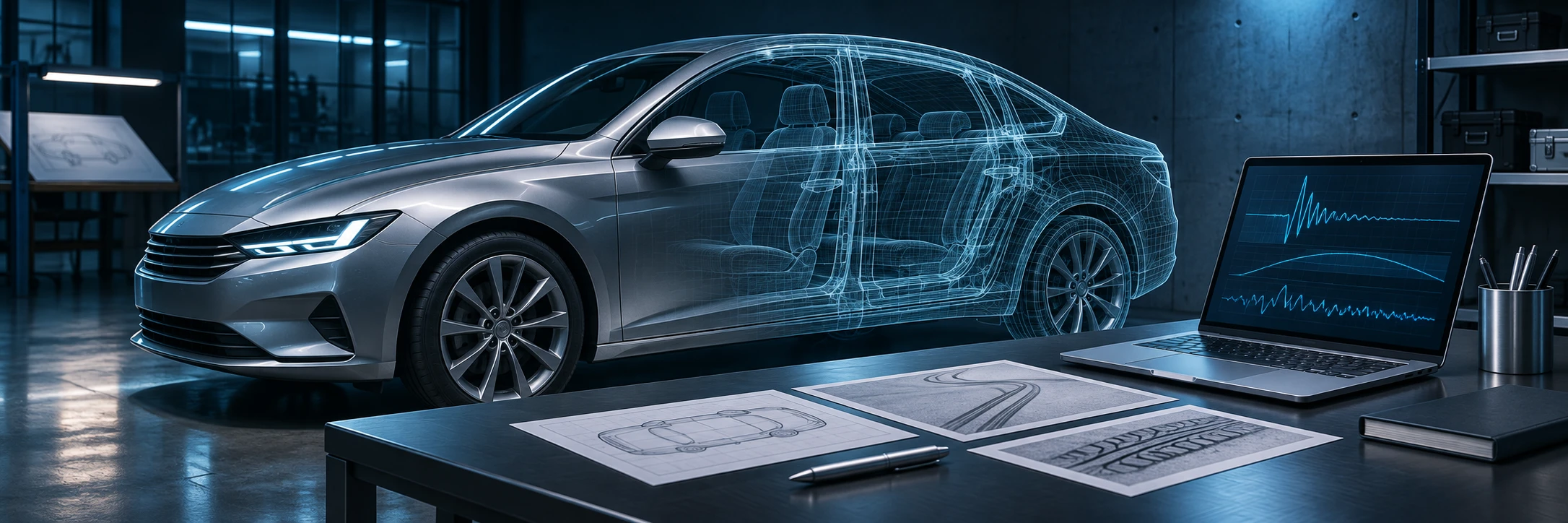
Illustration of a vehicle transitioning into a wireframe beside an analyst’s laptop and evidence documents.
Conceptual illustration of the vehicle-to-evidence workflow.

Professional support

Bring the question.
We will help scope the work.

From onboarding and report questions to a complex reconstruction, the first step is understanding the assignment. Share the vehicle, location, available evidence and the decision you need to inform.

Technical support
Field workflow, communication issues and report questions.

Engineering services
Reconstruction, specialist analysis and formal opinions under a defined engagement.

Evidence support
Acquisition records, available underlying outputs and explanations of the reporting process.

Explore expert support ↗PDF ↗

Start with Collision Sciences

Build your vehicle data program.

Register your interest in CrashScan to receive onboarding information and guidance on access, equipment and training. Already have a kit from your organization? Use the same form to request your account.