Collision Sciences Inc. | CSI-CASE-12 | October 2026 | www.collision-sciences.com
01 / In this resource
Collision Sciences | CrashScan
02 / In this resource
Case spotlight 12
03 / In this resource
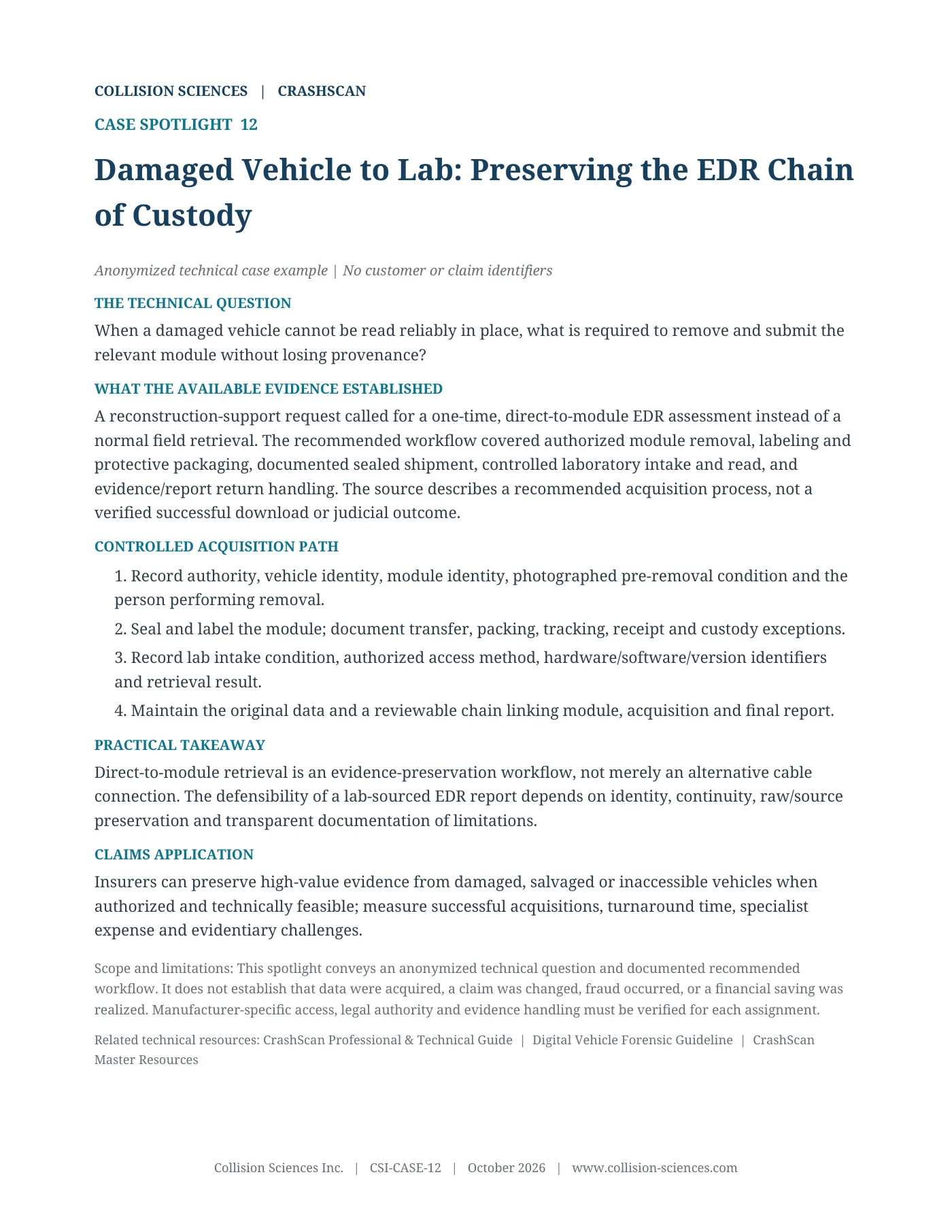
Damaged vehicle to lab: preserving the EDR chain of custody
Anonymized technical case example | No customer or claim identifiers
04 / In this resource
The technical question
When a damaged vehicle cannot be read reliably in place, what is required to remove and submit the relevant module without losing provenance?
05 / In this resource
What the available evidence established
A reconstruction-support request called for a one-time, direct-to-module EDR assessment instead of a normal field retrieval. The recommended workflow covered authorized module removal, labeling and protective packaging, documented sealed shipment, controlled laboratory intake and read, and evidence/report return handling. The source describes a recommended acquisition process, not a verified successful download or judicial outcome.
06 / In this resource
Controlled acquisition path
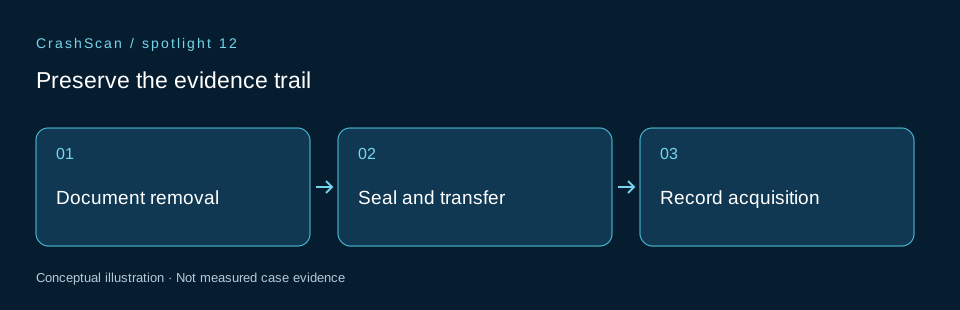
- Record authority, vehicle identity, module identity, photographed pre-removal condition and the person performing removal.
- Seal and label the module; document transfer, packing, tracking, receipt and custody exceptions.
- Record lab intake condition, authorized access method, hardware/software/version identifiers and retrieval result.
- Maintain the original data and a reviewable chain linking module, acquisition and final report.
07 / In this resource
Practical takeaway
Direct-to-module retrieval is an evidence-preservation workflow, not merely an alternative cable connection. The defensibility of a lab-sourced EDR report depends on identity, continuity, raw/source preservation and transparent documentation of limitations.
08 / In this resource
Claims application
Insurers can preserve high-value evidence from damaged, salvaged or inaccessible vehicles when authorized and technically feasible; measure successful acquisitions, turnaround time, specialist expense and evidentiary challenges.
Scope and limitations: This spotlight conveys an anonymized technical question and documented recommended workflow. It does not establish that data were acquired, a claim was changed, fraud occurred, or a financial saving was realized. Manufacturer-specific access, legal authority and evidence handling must be verified for each assignment.